Driving in Costa Rica: Essential Safety Tips
Driving through the Costa Rican highlands strips away the insulated resort experience, placing you directly against the raw mechanics of tropical topography. The ascent toward Bijagua demands a specific mental calibration—you trade the predictable, multi-lane coastal highways for steep volcanic gradients, blind curves, and sudden microclimates. Mastering these mountain routes guarantees a profound sense of independence, assuming you understand the uncompromising rules of the road.
The Northern Highlands around the Tenorio Volcano operate on their own distinct rhythm. Weather patterns shift without warning, turning dry dirt roads into slick clay traps in a matter of hours. Success behind the wheel requires preparation, a firm grasp of local insurance mandates, and the judgment to know when to turn back.
Rental Insurance & Documentation
Securing a vehicle at Juan Santamaría or Liberia airport introduces travelers to a highly specific, strictly enforced legal framework. Costa Rican law mandates every single driver carry Seguro de Responsabilidad Civil, a Third-Party Liability (TPL) policy. Rental agencies enforce this aggressively at the counter; you cannot waive it under any circumstance. Collision Damage Waiver (CDW) sits in a completely different category.
- TPL is legally mandatory and billed daily by the local agency.
- Premium travel credit cards often absorb CDW costs as a built-in perk.
- Agencies demand a physical, printed letter from your bank explicitly stating Costa Rica coverage.
- Confirm your credit card policy specifically covers 4×4 vehicles, as many default to sedans only.
Without physical proof of CDW coverage, counter agents will attach the maximum daily premium to your bill. The legal protocols following a collision are equally rigid. If you dent a bumper, you cannot simply exchange information and drive away. The law dictates you must leave the vehicles exactly where they crashed and dial 911 to summon the transit police (tráfico) and an insurance investigator. Always keep your passport, the physical entry stamp, and a digital copy of your rental agreement readily accessible in the cabin.
Mastering Rural Terrain
Algorithmic routing operates differently in the tropics. Waze dominates the local driving culture because its crowdsourced data adapts immediately to washed-out bridges or sudden mudslides, heavily outperforming standard GPS applications. The software relentlessly optimizes for time, which creates a distinct hazard—directing drivers off established asphalt onto unpaved agricultural tracks to save three minutes.
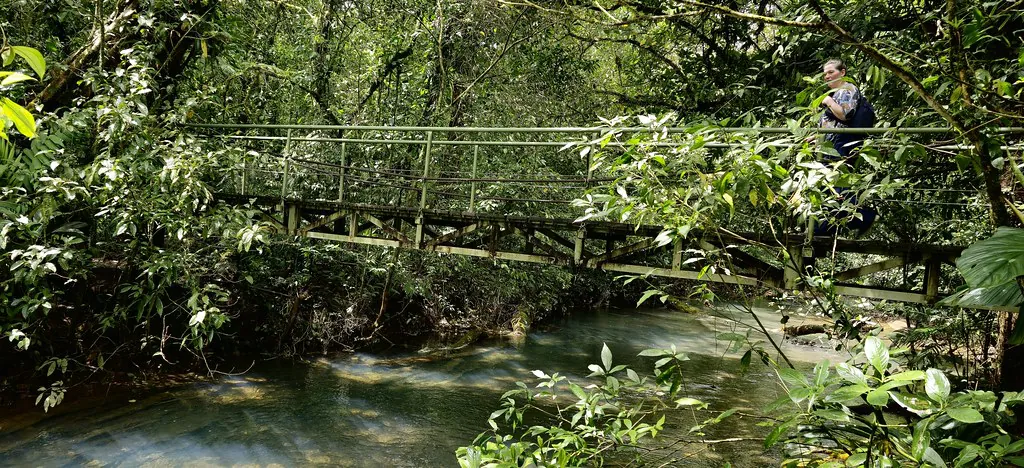
Route 6, branching off the main Interamericana Highway toward Bijagua, introduces you to the concept of the one-lane bridge. You will frequently see signs reading CEDA EL PASO (Yield). The vehicle that reaches the bridge first possesses the right of way, a rule executed with rapid flashes of the high beams.
During the dry season, a standard sedan might survive Waze’s rural shortcuts. Once the torrential rains arrive in May, those same tracks dissolve into deep, impassable clay ruts. The primary route from Liberia to Bijagua maintains excellent conditions, and the final approach to the Rio Celeste trailhead is now fully paved. While the road is no longer gravel, its steep hills and narrow curves can get slippery when wet, meaning a high-clearance 4×4 vehicle is still highly recommended during heavy rains.
If an unmarked shortcut looks like an active riverbed, it probably is. Reverse your vehicle immediately and stick to the primary highway.
Costa Rican Driving Etiquette & Law Enforcement
Speed limits register in kilometers per hour and are heavily enforced by traffic police utilizing handheld radar guns. Fines for exceeding the limit, especially in designated school zones (Zonas Escolares), run aggressively high and must be settled before the government allows you to leave the country. You will routinely encounter official police checkpoints on major transit corridors. Officers wave most tourists through without a second glance. If an officer signals you to pull over, roll down your window, hand over your passport containing your entry stamp, and present your physical driver’s license. The state recognizes foreign licenses for the exact duration of your tourist visa.
Slow-moving agricultural trucks dominate the mountain passes. Locals frequently overtake these massive vehicles on double yellow lines. Resist the urge to copy this specific behavior. The blind curves surrounding the Tenorio Volcano conceal oncoming traffic until the last possible fraction of a second, leaving zero margin for error.
Safety & Wildlife Awareness
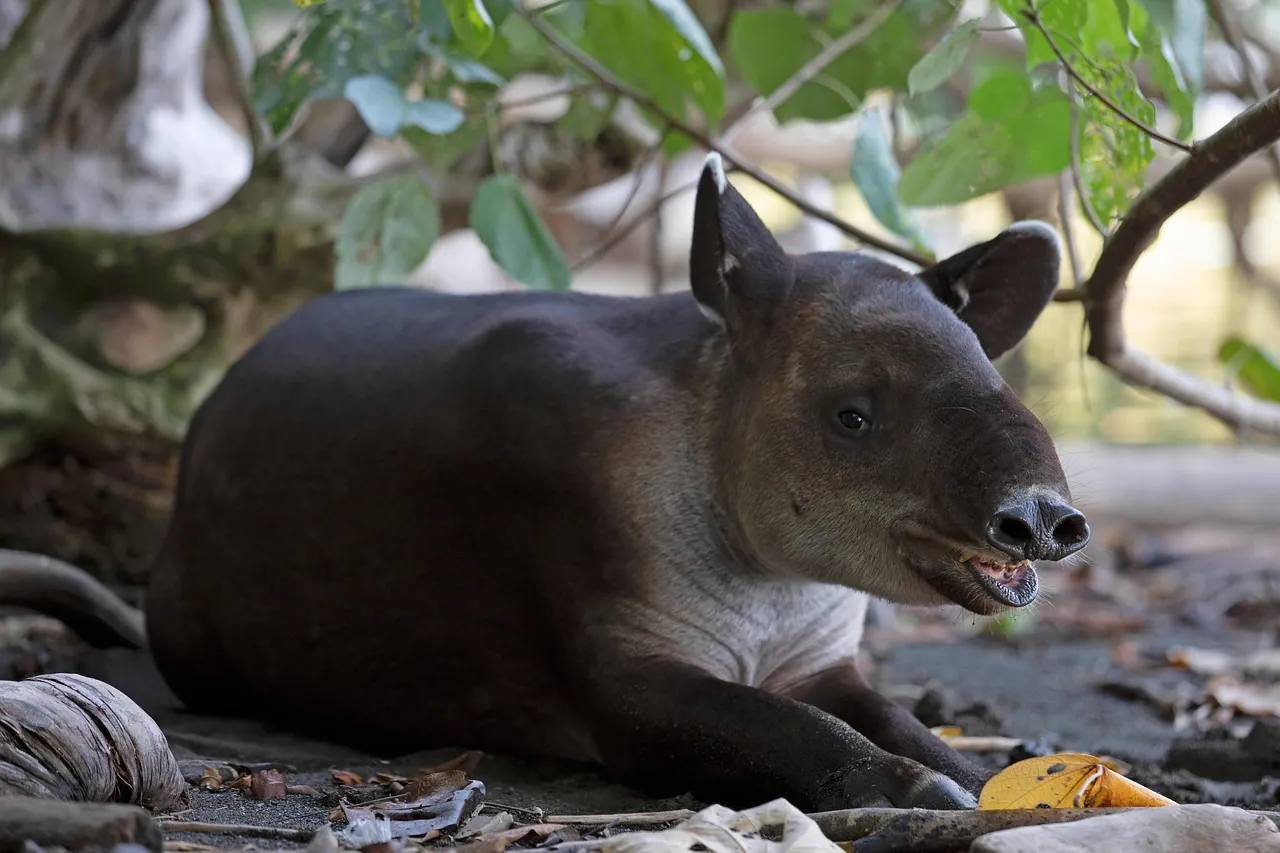
Sunset abruptly terminates safe driving conditions in the northern mountains. Rural routes lack reflectors, lane demarcations, and ambient street lighting. Thick fog frequently rolls down the slopes of Tenorio after dusk, cutting visibility to absolute zero within minutes. You also share teh asphalt with nocturnal wildlife—Baird’s tapirs, two-toed sloths, and stray livestock routinely breach the tree line.
Potholes present another distinct danger. During the rainy months, a small puddle on the asphalt easily masks a suspension-shattering crater. Without daylight to illuminate these structural failures, hitting one at sixty kilometers per hour ruins a radiator instantly.
Gasoline stations (gasolineras) operate exclusively as full-service hubs. You pull up, hand the attendant your keys, state your fuel preference, and they handle the pumps. Fill your tank in major transit towns like La Fortuna or Liberia before entering the Bijagua corridor. Remote sectors simply cannot accomodate stranded motorists, making an empty tank exactly the kind of situation you want to avoid getting stuck in.


Parking near trailheads requires a specific protocol to prevent break-ins. Official lots deploy attendants, locally known as guachimanes, who charge a nominal fee for watching your vehicle. Pay the few thousand colones. Never leave luggage, electronics, or passports visible on the seats. A shattered window takes thirty seconds to execute.
Traveler Advice & Official Resources
Validate road closures and park accessibility directly through trusted administrative channels. The Ministry of Public Works and Transport (MOPT) issues real-time bulletins on major highway structural issues across the Alajuela province. The National System of Conservation Areas (SINAC) governs the operational status of Tenorio Volcano National Park, posting sudden closures caused by extreme weather or overflowing rivers. For baseline travel advisories and visa protocols, consult the Visit Costa Rica Official Portal.
Those aiming to maximize their time in the water without the stress of managing washed-out side roads can bypass driving logistics entirely. Booking an organized tubing excursion down the Rio Celeste or joining a specialized horseback riding adventure transfers the responsibility of navigation directly to experienced local guides.
Need help finalizing your itinerary? Review our comprehensive Transport Guide for detailed maps, shuttle schedules, and step-by-step routing instructions to the park entrance.