Strategic Planning for Tenorio Volcano National Park
Command your itinerary before you arrive at the gates. Navigating the Tenorio Volcano National Park demands precise preparation regarding weather patterns, geological realities, and strict governmental entry regulations. The striking sky-blue water of the river manifests as a physical reality—the direct result of aluminosilicate minerals suspended in the current reflecting sunlight. Seeing this phenomenon at its absolute peak requires you to master the regional climate cycles and execute your arrival with military precision.
The Golden Rule: Why 8:00 AM Matters
The national park operates under strict daily capacity limits to protect the surrounding environment. Securing an entry requires foresight. Position yourself at the ranger station by 7:45 AM. The tour buses departing from Guanacaste and La Fortuna deposit hundreds of passengers by 10:30 AM. That is the kind of crowd you want to stay away from. Early access guarantees you hit the midway waterfall observation deck (the primary bottom deck is currently closed due to storm damage) before the midday heat spikes and the trail becomes congested with international tour groups.
The difference between an isolated wilderness hike and a congested tourist queue comes down to your alarm clock.
Establishing your base camp in the nearby town of Bijagua serves as a massive logistical advantage. Sleeping twenty minutes from the entrance allows you to bypass the two-hour morning commute required from other major hubs. Review our Lodging & Accommodations guide to identify properties located within a short drive of the ranger station.
Park Operational Logistics
The Costa Rican government manages park access through a centralized digital system. You cannot purchase entry passes at the physical gate under any circumstances. All visitors must secure their reservations in advance through the official SINAC National System of Conservation Areas portal. Officials enforce a hard cutoff for incoming hikers, meaning a delayed departure could cost you your entry entirely.
| Category | Operational Details |
|---|---|
| Official Operating Hours | 8:00 AM – 4:00 PM Daily |
| Last Permitted Entry | 2:00 PM (Strictly Enforced) |
| Optimal Arrival Window | 7:45 AM |
| Peak Congestion Days | Saturday & Sunday |
| Mandatory Ticket Portal | Online Only (SINAC) |
Seasonal Dynamics & The Chemical Reaction
The optical illusion occurring in the water relies entirely on specific weather conditions. Understanding the distinction between the dry and green seasons will dictate the success of your photography and the difficulty of your hike.
Dry Season (December – April)
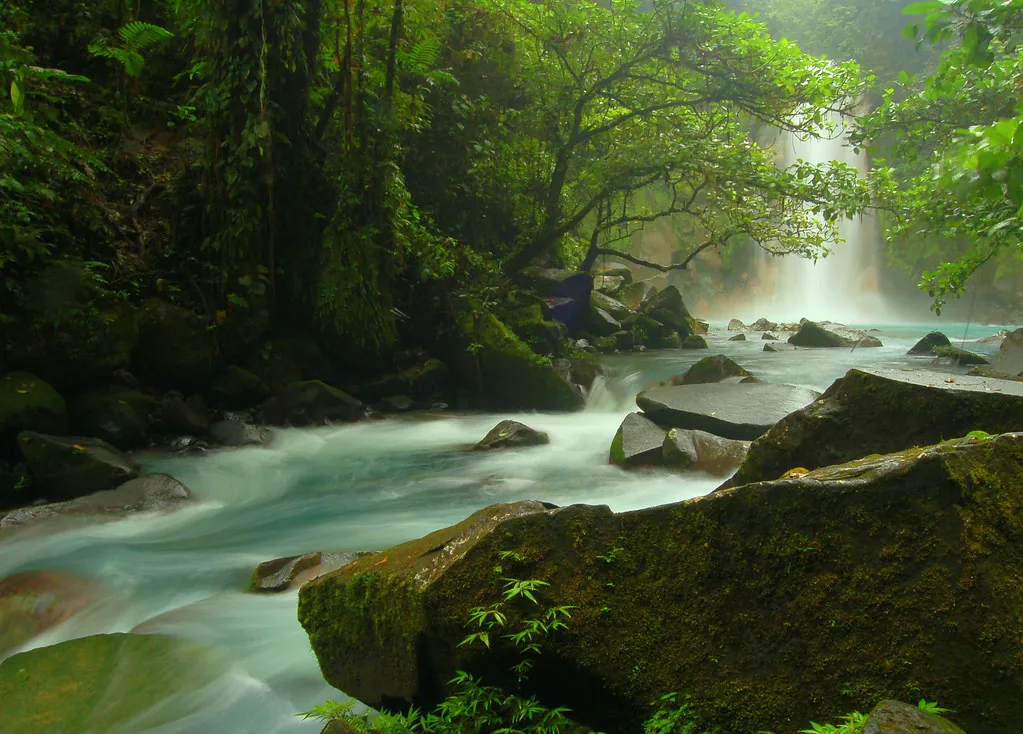
At the confluence known as the Teñideros, the Buenavista and Quebrada Agria rivers collide. The resulting chemical reaction causes aluminosilicate minerals to enlarge and scatter sunlight, producing an intense cyan hue. Clear skies and lower precipitation rates during the dry months provide the highest probability of witnessing the phenomenon at maximum intensity. The trails remain relatively firm, allowing for a faster hiking pace.
Green Season (May – November)
The surrounding canopy absorbs intense afternoon downpours. Heavy rainfall upstream frequently dilutes the mineral concentration and introduces sediment into the current. The water can shift from cyan to a murky brown in a matter of hours. Flexibility remains critical during these months. Consult the official Costa Rica National Meteorological Institute (IMN) for localized 24-hour forecasts before finalizing your travel schedule.
Altitude and Microclimates
The Tenorio region sits at an elevation that significantly alters its climate compared to the coastal lowlands. Temperatures typically hover between 18°C and 26°C (65°F–79°F). The dense forest traps moisture, creating a permanent high-humidity environment where sudden temperature drops occur during afternoon rainstorms. You will sweat profusely on the ascent and rapidly cool down when you stop at the observation platforms. Layering your clothing becomes an absolute necessity for regulating your core temperature.
Essential Rainforest Gear
The rugged terrain of the volcanic highlands punishes inadequate preparation. The primary trail transitions from compacted dirt to slick clay depending on the moisture levels of the previous night. Casual sneakers fail immediately under these conditions.
- Aggressive Tread Footwear: Closed-toe hiking boots or specialized high-traction trail shoes prevent severe injuries on the steep, root-covered inclines.
- Moisture-Wicking Synthetics: Avoid cotton entirely. It retains sweat and rainwater, remaining heavy and uncomfortable throughout the entire trek.
- Dedicated Rain Gear: Pack a lightweight, breathable poncho. Umbrellas snag on low-hanging branches and obstruct fellow hikers on the narrow path sections.
- Waterproof Storage: Utilize industrial dry bags to shield expensive cameras and phones from sudden, unpredictable downpours.
- Chemical Protection: Apply high-SPF sunscreen and DEET-free insect repellent to protect teh local ecosystem from toxic chemical runoff.
For a comprehensive breakdown of technical clothing and equipment specifications, consult our Ultimate Rainforest Packing List.
Navigation and Expert Resources
Maximizing your time on the ground requires reliable transport and expert navigation. The drive from major tourist hubs involves winding mountain roads that demand your full attention. Study our How to get to Rio Celeste guide for specific route conditions and rental car recommendations. Before setting out, familiarize yourself with standard driving practices via our Driving in Costa Rica Safety Guide.
Furthermore, consider hiring a certified local guide. Professionals understand the complex geology of the volcanic region and track the movements of elusive wildlife like the Keel-Billed Toucan or the White-Headed Capuchin monkeys that hide high in the canopy. To secure an expert, explore the Rio Celeste Nature Hike or browse alternative options on our Tickets & Tours directory.
If you crave adrenaline, authorized operators run the Tubing in Rio Celeste Tenorio Park excursions on unregulated sections of the river, far outside the protected boundaries of the national reserve.
Frequently Asked Questions
Is it possible to swim in the river inside the park?
No. Swimming is strictly prohibited inside the Tenorio Volcano National Park. This regulation preserves the delicate chemical balance of the water and protects visitors from unpredictable currents. Familiarize yourself with all restrictions on our Visitor Rules & Guidelines page. For aquatic activities, operators run dedicated tubing tours outside the protected reserve boundaries.
How long does the hike take?
The standard out-and-back route covering the waterfall, the Borbollones (bubbling hot springs), and the Teñideros requires approximately three to four hours. This timeline extends significantly if heavy rains have degraded the path, turning the steep staircases into slow-moving bottlenecks.
Do I need a 4×4 vehicle to reach the park?
You can reach the main entrance via fully paved routes using a standard two-wheel-drive sedan. However, if you plan to explore remote trails or your specific eco-lodge sits at the end of a steep gravel driveway, higher clearance proves necessary. Check the Visit Costa Rica official tourism board for broad regional updates on infrastructure.
What happens if it rains?
Operations continue during standard tropical showers, which occur almost daily. In cases of extreme weather where trail conditions deteriorate to a hazardous level, SINAC officials retain the authority to close the gates without prior notice to ensure public safety.
Are there lockers at the park entrance?
Facilities at the ranger station remain extremely limited. Leave non-essential electronics and valuables locked securely at your hotel or completely out of sight in your vehicle’s trunk before you approach the ticket verification window.