The Truth About Swimming in Rio Celeste: Legal Access Points
The Great Misconception: Swimming at the Iconic Waterfall
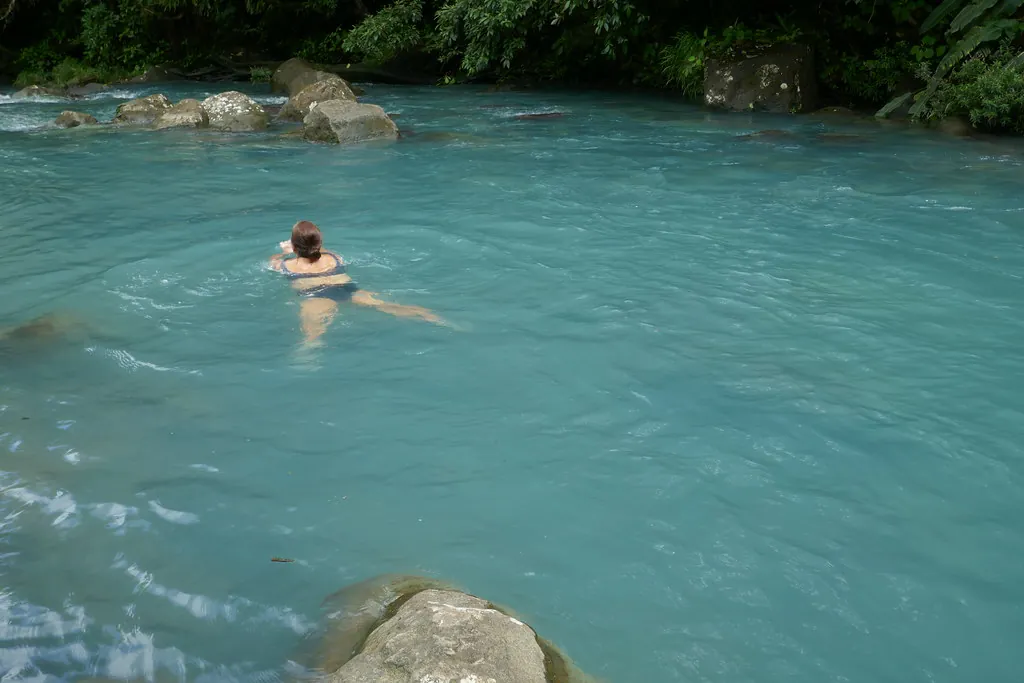
Decades of heavily edited social media posts and outdated travel blogs have cemented a persistent myth about Tenorio Volcano National Park. Visitors arrive expecting to strip down and dive into the glowing turquoise pool situated directly beneath the famous Catarata Río Celeste. The reality is far more restrictive. Swimming in the waterfall pool, or anywhere within the national park boundaries, is strictly prohibited and rigorously monitored by park authorities.
“Tourists arrive with towels in hand, expecting a pristine jungle swimming hole. They leave with a hard lesson in ecological preservation. The water is for looking, not touching.”
Local Tenorio Park Ranger
This prohibition is not arbitrary. The river’s striking coloration is the result of a delicate chemical suspension. The brilliant optical illusion occurs precisely at a confluence point known as Los Teñideros, where the acidic Quebrada Agria merges with the Río Buenavista. This mixing triggers the suspension of aluminosilicate particles that scatter sunlight, creating the vivid sky-blue hue. Human interference disrupts this balance. Sunscreen, insect repellent, and natural body oils introduce foreign chemicals that can degrade the exact mineral concentration required for the Mie scattering effect. Protect the water. For a deep-dive into the specific volcanic mechanics behind this optical illusion, review our comprehensive breakdown of the science of the blue water.
Defining the Legal Boundaries
Understanding where the national park ends and public access begins is the most critical step in planning your itinerary. Costa Rica’s environmental laws strictly demarcate protected conservation land from municipal waterways. The official National System of Conservation Areas (SINAC) explicitly outlines these zones to prevent visitor confusion and ecological damage.
The Protected Interior (No Swimming)
The interior of Tenorio Volcano National Park is an ecological sanctuary. This zone encompasses the primary trail network, the Catarata Río Celeste, the viewing platform at Laguna Azul, the bubbling hot springs of Los Borbollones, and the critical Los Teñideros confluence. If you have passed the official SINAC ranger station and scanned a ticket, you are inside the protected zone. Zero water contact is permitted. Period.
The Exterior Access (Legal Swimming)
Once the river flows beyond the physical boundaries of the national park, it enters public and private agricultural lands. In these lower elevations, the mineral suspension remains intact, keeping the water blue, but the strict federal ban lifts. Visitors seeking a legal dip must navigate downstream to specific bridge crossings, private reserves, or local eco-lodges that border the river outside of the protected jurisdiction.
A common geographical error involves confusing Route 6 with the Route 606 bridge. Tourists plotting cross-country road trips frequently search for swimming spots near this location. Route 606 is actually a fully paved but winding mountain road leading toward Monteverde, miles away from the legal Rio Celeste access points. Relying on outdated highway maps will lead you to dry, rocky ravines rather than the blue river.
Strict Enforcement Inside Tenorio Volcano National Park
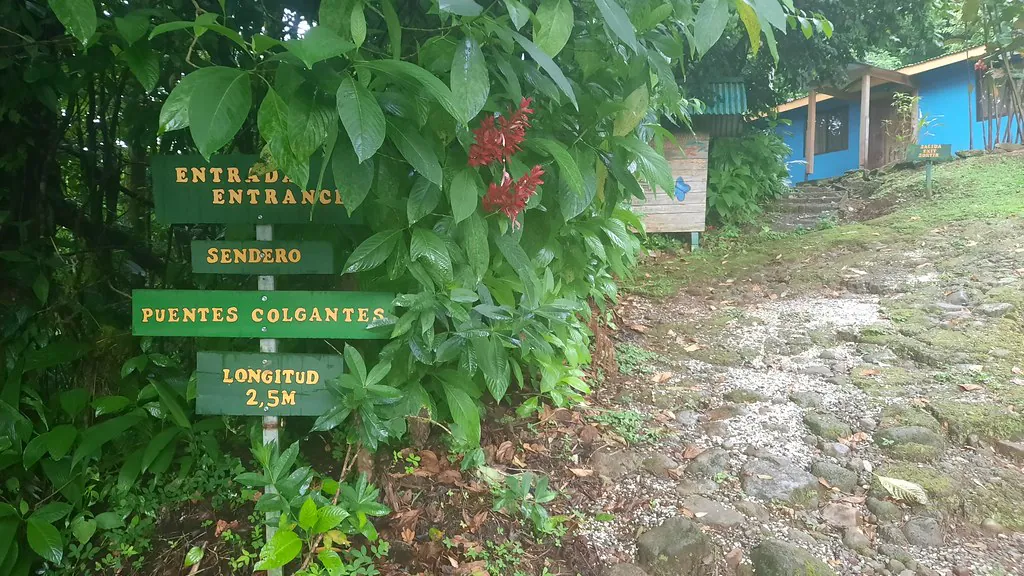
Do not attempt to test the vigilance of the park rangers. The National System of Conservation Areas (SINAC) operates under a zero-tolerance policy regarding water contact. Enforcement is constant, with rangers patrolling the main landmarks—particularly the Catarata Río Celeste, Laguna Azul, and Los Borbollones—throughout operating hours. The official SINAC environmental protection guidelines mandate immediate action against violators.
Attempting to bypass the wooden barriers or slip into the water for a quick photograph carries heavy consequences. Violators are immediately evicted from the park without a refund. In severe cases involving damage to the flora or repeated non-compliance, rangers will issue substantial financial fines and permanently ban individuals from the reserve. The ecosystem is fragile. The rules are absolute.
Complicating interior access further are the 2025/2026 Waterfall Trail access updates. As of mid-2025, the steep, 250-step trail leading directly down to the waterfall observation point is experiencing partial closures due to storm damage and landslides. Visitors can view the thundering cascade from a halfway platform on the stairs, but descending to the base is strictly prohibited until repairs are completed. This restriction makes the external, legal swimming holes further downstream even more vital for visitors hoping to interact with the river.
Mandatory Entry Protocols for Non-Swimming Hikers
Even if you only intend to hike and photograph the river, entry into Tenorio Volcano National Park requires precise logistical planning. Gone are the days of arriving at the gate with cash in hand. The park operates on a strict digital reservation system to manage ecological impact and trail crowding. If you arrive without a pre-purchased barcode, you will be turned away.
The daily visitor limit is firmly capped. During the peak dry season (December through April), tickets frequently sell out weeks in advance. Thorough visitor planning is non-negotiable.
| Protocol / Requirement | Current 2025/2026 Details |
|---|---|
| Online Ticketing Portal | Advance purchase is mandatory via the official SINAC online booking system. |
| Payment Methods Accepted | Credit or debit card only (processed online). No cash accepted at the gate. |
| Foreign Adult Admission | $12.00 USD (plus standard processing taxes). |
| Park Operating Hours | 8:00 AM to 4:00 PM. (Last entry strictly enforced at 2:00 PM). |
| Parking Logistics | Private lots outside the main gate charge approximately 3,000 CRC. |
Where You Can Legally Swim (And Tube)
Finding legal access to the blue water requires venturing slightly off the main tourist circuit. There are both public access points and private commercial properties that cater to visitors wanting to swim safely and legally. For travelers looking to combine swimming with structured hiking and adventure activities, the surrounding perimeter of the park offers excellent options.
The Rio Celeste Danta Free River Pool
The most heavily frequented legal swimming spot is a public access point located about 1 kilometer (0.6 miles) past the Tenorio Volcano National Park entrance on the road heading toward the rural village of Katira. On navigation apps like Waze or Google Maps, this location is specifically pinned as “Rio Celeste Danta Free River Pool”.
Because it is a public bridge, infrastructure is virtually non-existent. There is no official, paved parking lot. Visitors must pull over and park on the narrow dirt shoulder of the main public road. Local residents run an informal parking service here, charging roughly 1,000 CRC (about $2 USD) to monitor vehicles. Pay the fee. It ensures your rental car is watched while you are down in the water.
Be prepared for rugged conditions. The riverbed beneath the public bridge is extremely rocky, uneven, and notoriously slippery due to the mineral buildup. Protective closed-toe water shoes or sturdy river sandals, such as Keens or Tevas, are highly recommended. Navigating this current in standard flip-flops is considered dangerous and frequently results in rolled ankles or lost footwear.
Private Lodge Access and Day-Use Pools
If the public bridge sounds too chaotic, several local properties offer secure, private access to the river for a fee or as a guest amenity.
- Rio Celeste Hideaway “Tapir Preserve”: The luxury Rio Celeste Hideaway Hotel sits on an 80-acre private nature reserve. Guests staying on the property receive exclusive, complimentary access to a secluded section of the river. The walk down utilizes the property’s private “Armadillo Trail” or “Tapir Trail” for an easy 15-minute hike through primary rainforest.
- Cabinas Piuri Day-Use Access: For non-hotel guests seeking a safer alternative to the free bridge, properties like Cabinas Piuri offer private river access. They charge a day-use entrance fee of around 5,000 CRC (approximately $10 USD). This nominal fee grants you secure off-street parking, use of basic changing amenities, and a manicured path down to the water.
- Posada Río Celeste La Amistad: Located just 1.9 miles from the main waterfall trail, this 2-star family lodge features a short, well-maintained hike down to its own private, semi-secluded swimming hole. It is an excellent budget-friendly basecamp.
- Rio Celeste Aventuras Private Pool: This local tour operator maintains a private natural pool on the river. For a minor fee of roughly $2 USD, independent travelers can park securely and swim without dealing with the heavy congestion found at the public bridge.
Taking the Plunge: Tubing and Rafting
For those looking for more adrenaline than a static swimming hole can provide, the lower sections of the river are ideal for water sports. You can book a guided tubing descent that launches just outside the national park boundaries, allowing you to float down the celestial blue rapids while observing the dense jungle canopy above. Alternatively, if you are utilizing La Fortuna as your basecamp and want high-octane river action, embarking on a Class II-III whitewater rafting excursion offers an entirely different, thrilling way to experience Costa Rica’s northern waterways.
Map: Park Boundaries vs. Legal Swimming Zones
Use the map below to visualize the strict no-swim zone encompassing the upper elevations of the Tenorio Volcano National Park, contrasted with the pinpointed legal access areas downstream.