The adventure landscape surrounding Rio Celeste is a study in contrasts, blending ethereal, “otherworldly” aesthetics with the raw, uncompromising grit of a tropical cloud forest. Within the boundaries of the Tenorio Volcano National Park, the atmosphere is one of hushed reverence and physical endurance; the air is thick with 90% humidity and the faint scent of volcanic sulfur. This isn’t a manicured theme park experience. It is a volcanic landscape where the chemical alchemy of the water—explained in detail in our guide to The Science of the Blue Water—meets the physical reality of steep, mud-slicked trails.
It is a place where the “mystical” isn’t just a marketing term but a sensory reality felt in the cool mist of the waterfall and the silent shimmer of the turquoise lagoons.
2026 Trail Update: Please note that since mid-2025, storm damage has restricted access to the bottom of the waterfall stairs. While visitors can still enjoy stunning views from the midway observation deck, reaching the pool’s edge to experience the “cool mist” firsthand is currently off-limits.
Outside the park’s protected gates, the energy shifts. The surrounding perimeter turns the river into a playground, where the “no swimming” rules vanish, replaced by the splash of paddles and the rush of inner tubes. Whether you are navigating the deep “Macho” mud of the jungle trails or bracing for a Class IV drop on a nearby river, the experience is defined by the volcanic landscape’s ability to be both a serene visual masterpiece and a rugged physical challenge. Success here requires more than just a camera; it demands a strategic approach to timing, gear, and physical output.
Category 1: The Core Hiking Circuit
Sendero Misterios del Tenorio
This is the official 6-kilometer (3.7-mile) out-and-back trail that serves as the backbone of the Rio Celeste experience. Categorized as a moderate trek, it takes hikers through a primary cloud forest with significant elevation gains. The trail leads to the iconic Teñideros, where the chemical reaction involving aluminosilicate minerals turns the water blue. While the first third of the trail is paved or well-maintained gravel, the section past the waterfall turn-off degrades quickly into volcanic clay.
Some guides recommend a “reverse flow” strategy: bypass the waterfall stairs initially and hike directly to the confluence at the trail’s end. This allows you to reach the Teñideros before the heaviest mid-morning humidity and crowds. On the return leg, hit the waterfall. However, note that this means your most physically taxing ascent—the waterfall stairs—happens when you may already be drained by the jungle heat. Additionally, as of 2026, the lowest viewing platform at the waterfall is temporarily closed due to storm damage, meaning the stairs are only partially accessible. Always check the Seasonal Weather Guide before heading out, as heavy rains can turn these trails into impassable sludge.
- Distance: 3.7 miles (out-and-back)
- Terrain: Clay-heavy, often muddy, volcanic rock and non-slip metal grates.
- Tactical Tip: Rent “Botas de Hule” (tall rubber boots) for $5 at the trailhead to save your hiking boots from suction-loss in the mud.
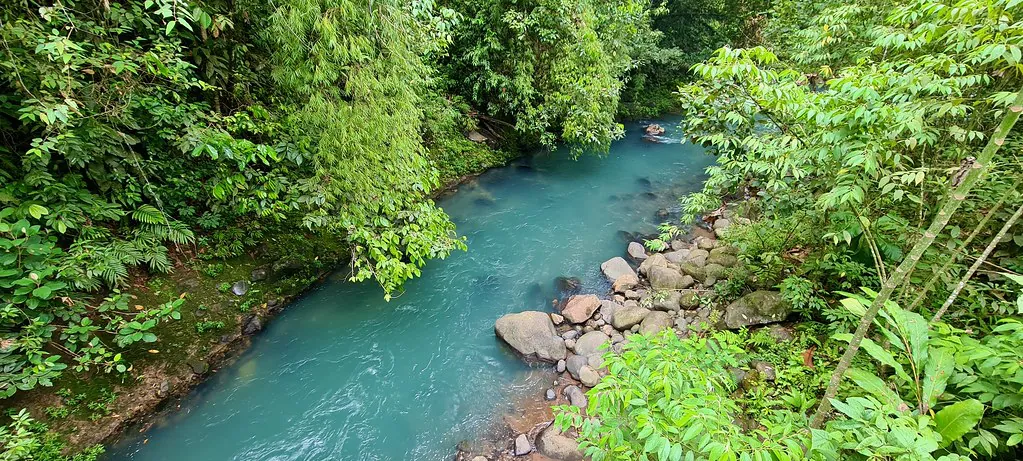
Category 2: The Vertical Challenge & Volcanic Zones
The 253-Step Waterfall Descent
The descent to the Catarata Rio Celeste is the park’s physical gatekeeper, though **access is currently restricted**. As of early 2026, storm damage has closed the bottom platform, limiting hikers to a midway observation deck. You cannot reach the pool’s edge. The 253 steps are effectively cut in half, but they remain slick with 90% humidity and forest mist. You still get the iconic line-of-sight to the 98-foot drop, but the ‘spray-in-your-face’ experience is off-limits. Budget your energy; the climb out remains a high-humidity calorie burner, even from the midway point.
Beyond the waterfall, the trail continues to the Laguna Azul viewing platform, which provides a moment of visual stillness; the water here is so opaque and calm it creates a perfect mirror reflection of the canopy, provided the capacity limit of 15 people isn’t exceeded. Following this is Los Borbollones. This is a “Sulfur Sensory Zone” where the concentration of volcanic gases is high. The smell of hydrogen sulfide—reminiscent of rotten eggs—is a direct indicator of the Tenorio Volcano’s fumarole activity beneath the riverbed. Visitors with respiratory sensitivities should move through this area without lingering.
- The Stairs: High-intensity climb; strictly not recommended for those with acute knee issues.
- Blue Lagoon: A deep, vibrant pool where the water’s stillness maximizes the Mie scattering effect.
- Security: There is a physical checkpoint at the SINAC entrance. Single-use plastics are confiscated; use a reusable flask. Refer to Visitor Planning & Safety for the full prohibited items list.
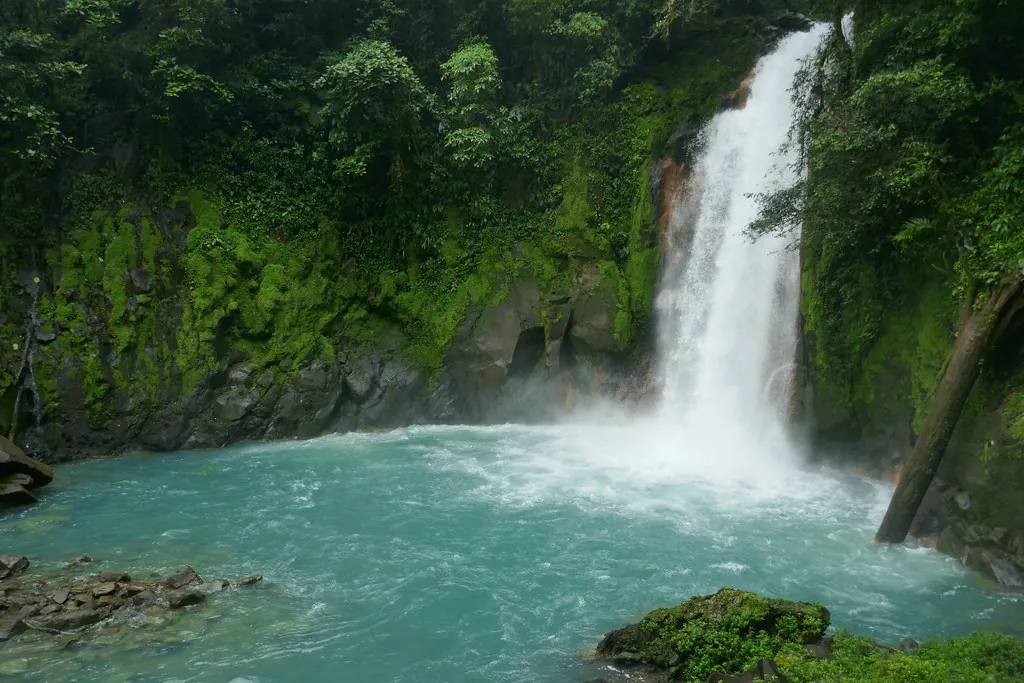
Category 3: Immersion Beyond Park Boundaries
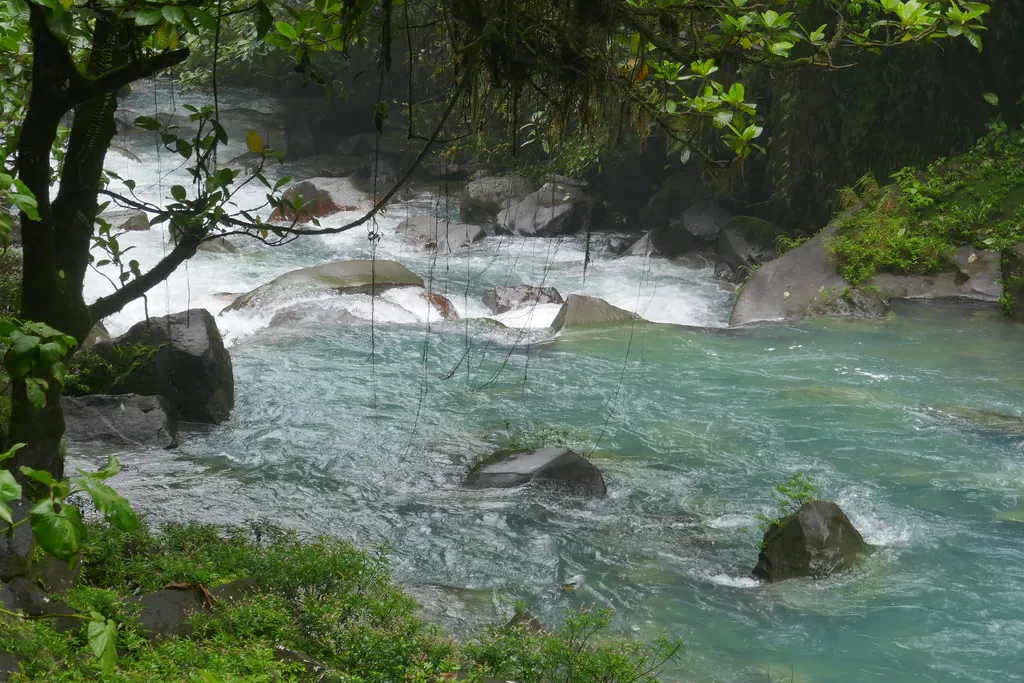
River Tubing & The “Free Pool”
While swimming is strictly prohibited inside the National Park to protect the delicate mineral balance, the Rio Celeste becomes a tactile experience about 1 kilometer past the park entrance. At the bridge on the main road, you will find the Rio Celeste Free Pool, a local “secret” and the only legal spot to swim in the blue water for free. For those arriving from Liberia or San José, finding this spot is easier with our Transport Guide.
For more structure, the lower basin of the river offers Class I and II tubing. These are heavy-duty, reinforced vinyl tubes with mesh bottoms designed to protect your lower body from “rock-scuffing” in shallow segments. The 4km stretch takes roughly 1.5 to 2 hours. If the Class II splashes of the Celeste are too tame, the nearby Rio Tenorio (45 minutes away) offers Class III and IV white-water rafting, providing the high-velocity adrenaline that the National Park trails lack.
- Rio Celeste Tubing: Gentle floating through novice rapids with physical water immersion.
- Rio Tenorio Rafting: The high-adrenaline alternative for experienced paddlers.
- Tapir Valley: A 220-acre private reserve nearby offering “Tapir Tours” with a high success rate. Essential for those using our Nature Guide.
Essential Gear & Preparation
| Activity | Required Gear | Physical Demand |
|---|---|---|
| Main Circuit Hike | Waterproof boots, 2L water (reusable), $5 for boot rental | Moderate-High |
| River Tubing | Water shoes (closed-toe), dry bag, sun protection | Low-Moderate |
| Waterfall Stairs (Midway Access Only) | Sturdy footwear, high cardiovascular patience | High |
| Tapir Tracking | Binoculars, long pants, neutral colored clothing | Moderate |
Preparation for Rio Celeste is largely about environmental management. During the “transition seasons” of May–June and November–December, the trail past the waterfall turn-off becomes a deep clay sludge. If you wear premium leather hiking boots, the mud suction is often strong enough to pull the sole off the boot or trap your foot entirely. This is why the local rubber boot rentals are not a tourist trap—they are a functional necessity. Furthermore, the SINAC guards are rigorous about the plastic ban; if you bring a disposable bottle, you will be forced to leave it in your car or decant it into a flask before entry.
- Environmental Warning: During heavy rain, the river turns brown (the “celeste” effect requires sunlight and specific mineral concentrations). Check current conditions in Bijagua.
- Safety: Volcanic soil is unstable. Stay on the marked “Sendero Misterios del Tenorio” to avoid soil collapses near the riverbank.
- Accessibility: The park is not wheelchair accessible beyond the initial 500 meters of the trail.
Top Adventure Tours & Experiences
Frequently Asked Adventure Questions
Is the hike to Rio Celeste difficult for children or seniors?
The difficulty is tiered. The first kilometer is relatively flat and easy for most ages, but the 253 steps to the waterfall (currently partially closed due to storm damage, limiting hikers to a midway deck) and the subsequent muddy sections toward Los Teñideros require good balance and cardiovascular health. It is not recommended for anyone with significant mobility issues or chronic knee pain due to the uneven volcanic terrain.
Can I really not swim anywhere inside the National Park?
Correct. Swimming is strictly prohibited within the park boundaries to preserve the water’s unique chemical composition and protect the riverbed. Guards patrol the area regularly, and the “no swimming” rule is one of the few SINAC regulations that carries an immediate expulsion from the park. Use the “Free Pool” outside the park gates for swimming.
What happens if it rains during my hike?
In a cloud forest, rain is common. However, heavy or sustained rainfall can cause sediment runoff which temporarily neutralizes the “blue” effect, turning the river a murky brown. While the hike is still a valid physical challenge in the rain, the visual payoff of the turquoise water may be lost, so checking a local Bijagua forecast is essential.
Do I need a guide for the “Misterios del Tenorio” trail?
While the trail is well-marked and easy to follow, a professional guide is highly recommended if your goal is to spot wildlife like the Baird’s tapir or white-faced capuchin monkeys. Guides have trained eyes for movement in the dense canopy that most tourists will overlook. For more on what you might see, visit our Wildlife & Nature Guide.
How long does the entire adventure typically take?
You should budget approximately 3 to 4 hours for the main park hike, including time for photos at the waterfall and the confluence. If you add tubing or a visit to a nearby private reserve like Tapir Valley, you are looking at a full 8-hour day of physical activity. Most visitors find that a morning hike followed by a late-afternoon tubing session is the optimal way to experience the region.