The Quest for Turquoise: Why Timing is Everything
The ethereal turquoise of Rio Celeste is not a permanent fixture of the landscape; it is a delicate chemical balance. Understanding the “Blue vs. Brown” dilemma is the most critical step in planning your visit to Tenorio Volcano National Park. A common mistake travelers make is checking the forecast for Liberia or La Fortuna and assuming a clear sky there translates to a blue river in the highlands. This is a false equivalence. The Tenorio Highlands operate under a distinct microclimate where Caribbean moisture and volcanic topography dictate the water’s clarity.
The river doesn’t just “turn” brown; it loses its ability to scatter light when volcanic sediment overpowers the mineral suspension.
While standard rivers carry simple mud, Rio Celeste’s visual identity depends on the suspension of aluminosilicates. If heavy rainfall introduces excessive silt from the slopes of the Tenorio Volcano, the “optical magic” is effectively masked. To understand the deeper mechanics of this, visit our guide on The Science of the Blue Water.
Orographic Forcing
The Tenorio Volcano acts as a massive geographic wall reaching 1,916 meters. As Caribbean trade winds hit these peaks, they are forced upward, cooling rapidly and dumping heavy rainfall directly into the river’s headwaters. This phenomenon, known as orographic forcing, means the Teñideros can experience a deluge while the town of Bijagua, just a few miles away, remains dry.
The Microclimate Trap
Standard weather apps are notoriously unreliable here. A “sunny” forecast for Upala can coincide with a flash flood at the park’s higher elevations, making real-time updates essential. This region serves as a transitional forest, caught between the dry heat of Guanacaste and the humid lowlands of the north. Expect rapid shifts in visibility and temperature.
The 566-Nanometer Sweet Spot
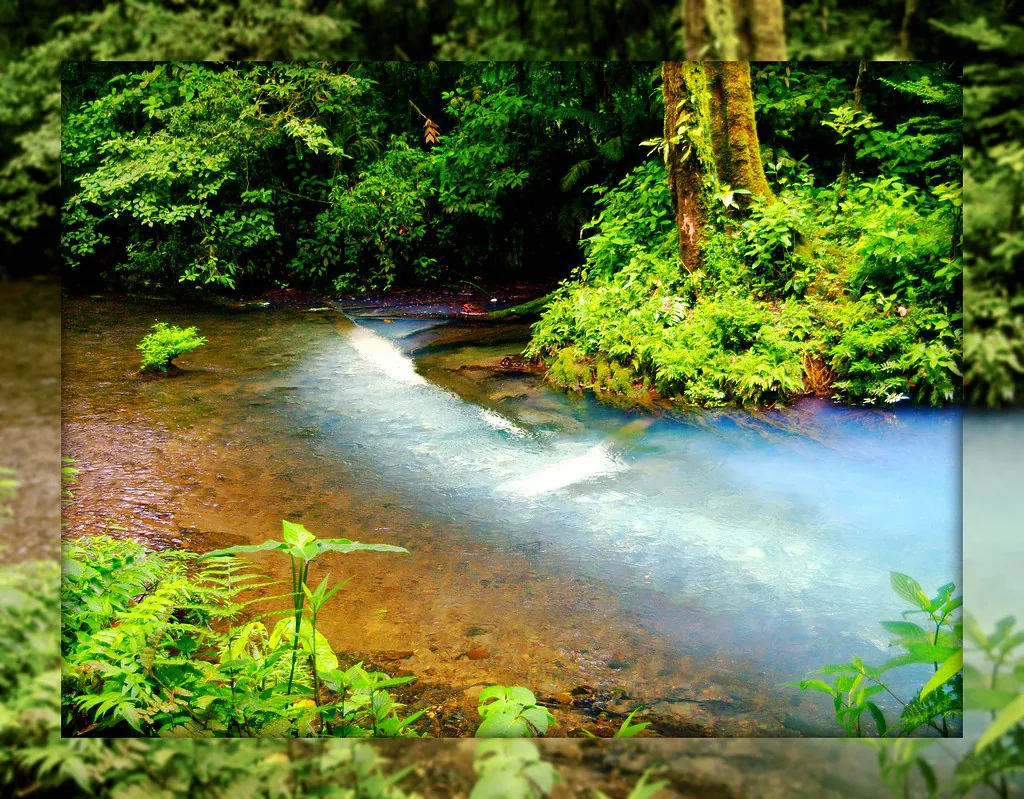
That electric blue isn’t a dye — it’s actually a physics trick called Mie scattering. See, the Río Buena Vista is full of tiny aluminosilicate particles (only 184nm). When they hit the Quebrada Agria and its 3.1 pH acidity, they start clumping together. Once they hit a diameter of exactly 566 nanometers, they bounce back the blue part of the light spectrum like a neon sign. Nature’s own chemistry set, right?
Thing is, rain kills the vibe. If it’s pouring, the water moves too fast for those particles to cluster, and muddy volcanic sediment just swallows the light instead of reflecting it. No light, no blue. Simple as that. Also — wear boots with actual grip. You’ll thank me later.
Rio Celeste Seasonal Reliability Guide
| Month | Rainfall Level | Blue Water Probability | Crowd Density |
|---|---|---|---|
| Jan – April | Low | 95% (High) | Very High |
| May – June | Moderate | 75% (Variable) | Medium |
| July – Aug | High | 60% (Risk of Brown) | Medium |
| Sept – Oct | Very High | 40% (Frequent Brown) | Low |
| November | High | 50% (Risk of Brown) | Low |
| December | Moderate | 85% (High) | Very High |
The 48-Hour Rule
If the sky absolutely opens up—we’re talking over 50mm in a single day—the river needs a “rest.” It usually takes 24 to 48 hours for the sediment to settle so that famous neon-blue “Mie scattering” look can actually show off again.
If you’re bringing a camera to Upala, patience is your best friend. Seriously. During the September and October peak, 86% to 90% humidity makes a 28°C (82°F) day feel like you’re walking through warm soup. Stuck waiting for the water to clear? If you’re staying in Bijagua de Upala, spend that time at Tapir Valley Nature Reserve. It’s a 220-acre (about 90-hectare) slice of wildness and basically the best spot in Costa Rica to see an endangered Baird’s Tapir. They actually love those gray, “recovery” days when the air finally cools down.
One more thing: check your gear on our Visitor Planning & Safety page before you head out. Rain does more than just mess with the water color—it turns that 3.7-mile main trail into a thick, volcanic sludge that’ll swallow a loose sneaker whole. Not fun.
The Midday Lighting Sweet Spot
There is a distinct difference between seeing the water and seeing it “glow.” While arriving at 8:00 AM is the superior strategy for beating the crowds and securing one of the limited entry slots under the SINAC “500/1,200 Rule” (where only 500 people are allowed on the trail at once), the color is actually most vivid between 10:30 AM and 12:30 PM.
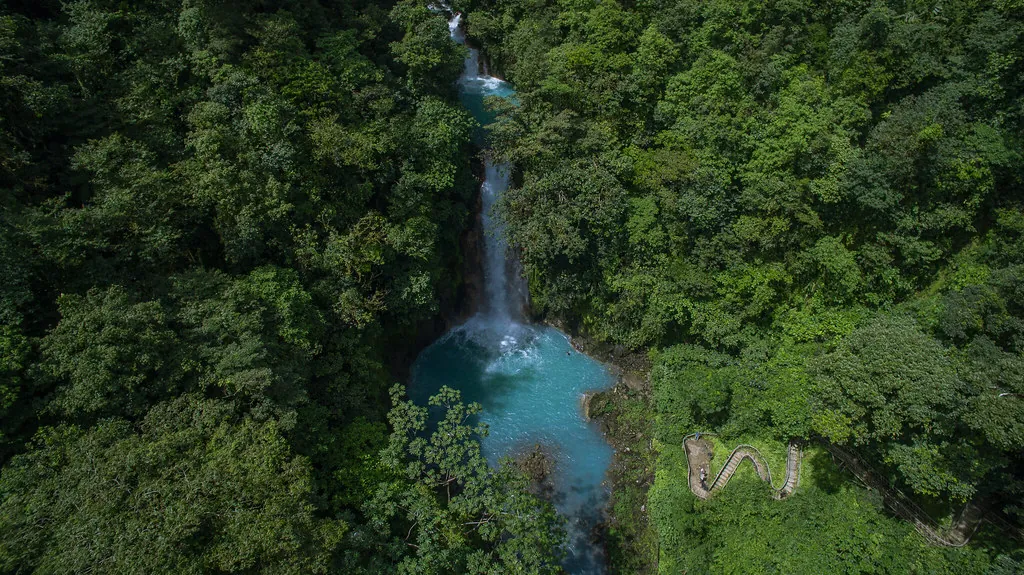
During this two-hour window, the sun is positioned directly overhead. This allows solar radiation to penetrate the water column at the steepest possible angle, triggering maximum Mie scattering. For those focused on professional photography, the “Electric Blue” intensity peaks when the sun hits the Blue Lagoon (Laguna Azul) without the interference of long shadows from the primary rainforest canopy. If you arrive early to beat the crowds, consider lingering near the waterfall viewpoint (note: the stairs to the base are currently closed) until the sun clears the ridge for the best shots.
Park Capacity and Crowd Mitigation
During the dry season (January to April), the park reaches its daily limit of 1,200 visitors frequently. Once 1,200 tickets have been scanned, SINAC shuts down the entrance for the day, even if you arrive before the official 2:00 PM last-entry cutoff. To avoid disappointment, you must purchase tickets in advance via the SINAC online portal. If you find the park at capacity, the surrounding area offers geothermal alternatives. The nearby Miravalles Volcano, the highest peak in the Guanacaste range at 2,028 meters, provides access to the Las Hornillas active crater. Here, you can walk inside a collapsed secondary crater and utilize mineral mud therapy rich in sulfur and zinc—a perfect contingency plan for busy days.
Top Rated

Rio Celeste Waterfall Hike from Arenal
⭐ Professional local guide included
Flexible • Professional guide
Free cancellation • Mobile ticket
🔥 Booked 10 times this week

Tubing in Rio Celeste
⭐ Professional local guide included
🔥 Booked 11 times this week
Frequently Asked Questions About Timing
- What time of day is best to visit? You should aim to arrive at the park gates by 8:00 AM to avoid the large tour groups that arrive from La Fortuna around 10:00 AM. Note: You must purchase your entry tickets online in advance through the SINAC website. While the “electric” blue is brightest at midday, the early morning offers a much higher probability of spotting wildlife like white-faced capuchin monkeys or the Blue Morpho butterfly before they are startled by trail noise.
- Will the water be blue if it rained yesterday? The color depends entirely on the intensity of the rain; a light shower will not affect the hue, but a heavy tropical storm typically requires a 24-hour wait for sediment to settle. If the rainfall in the Upala region exceeded 50mm, the river will likely remain in its “Brown Phase” for at least one full day.
- Does the park close due to rain? The Tenorio Volcano National Park rarely closes for rain alone, as rainfall is a standard feature of the rainforest ecosystem. However, rangers frequently close specific sections due to trail damage, mudslides, or dangerously slippery conditions. Update: Since mid-2025, the steep stairs leading to the waterfall base have been closed due to landslide damage, though you can still view the waterfall from the upper steps.
- Can I swim if the water is brown? No, swimming is strictly prohibited within the national park boundaries at all times, regardless of the water’s color or the weather conditions. This rule is enforced by SINAC to protect the delicate mineral balance of the river and to ensure visitor safety in a remote volcanic environment.
- Where can I check live conditions? Local hotels and lodges in Bijagua are your best resource for real-time information as they communicate daily with park rangers. Because the park is a 1.5 to 2-hour drive from La Fortuna, it is highly recommended to call your tour operator or a local Bijagua business before departing if there has been heavy rain overnight.